

Updated on April 16, 2026
How to Punch Harder Using Physics (Not Just Muscles) Part 1
The content is in editing stage
On your first time hitting a punching bag in martial arts class, your coach tells you to hit it harder. Then you look over to the other person next to you, who is hitting the bag so much harder and is getting it rocking with every hit. In your mind, the other person may have been training for a much longer time and had built enough strength to punch harder. So, you brace and wind up your shoulders to hit the bag harder. The punch landed, but the hit is by far lacking power.
The secret recipe is not only in the crude raw power. The equally important piece is the understanding of human biomechanics and natural law of physics.

Have you seen the devastating knockout power of Mike Tyson's punches? What about Bruce Lee’s one-inch punch demonstration - he had sent skilled fighters reeling backwards.
We'll discuss and give you insightful information of how power travels from the ground up through your body to your fist, according to the principles of body mechanics that are used in Choy Li Fut kung fu, boxing or karate. The science is the same across all striking style martial arts.
In Part 1: The Science of Punching Power
Punching Power Is Not Coming From Your Arms
Our Body Isn’t A Rigid Pole, We’re Like Chains—A Kinetic Chain
Channelling Energy from The Ground Up - Your Feet to Your Fist
Your Brain Gets It, But Your Body Can’t Perform: A Challenge For Most Martial Artists
👉 Continue to Part 2 for Training Methods & Conditioning
Punching Power Is Not Coming From Your Arms
↩ back to table of contents
Contrary to popular belief, the power for the hand strike doesn’t come only from the shoulders or arms. Having thicker shoulders and bigger biceps doesn’t entirely contribute to your hand strike or punching power.
Let’s Deconstruct Your Mindset!
True punching power comes from your legs pushing off the ground. Think of the ground as your launching pad.
Let’s grasp this concept: Your arms and fists are part of a delivery mechanism for executing a punch. Bigger biceps, more chest muscles don’t equate to more power in your punching. What matters is the skill to redirect the power from the “launch pad” ground to the intended target through your fist – that’s called channelling the power from the ground up.
That’s why boxing legend, Mike Tyson, or the iconic kung fu personality, Bruce Lee, don’t have a bodybuilder's massive muscular build. Yet, they pack tremendous power in their punches. We'll explore the details.
Our Body Isn’t A Rigid Pole, We’re Like Chains—A Kinetic Chain
↩ back to table of contents
It would be easy if our bodies were a single rigid pole; all we need is to push one end, and the other end moves instantly.
But we’re not rigid poles; our bones and joints are connected like links and connections of a chain. The bones in our body are the links of a chain, and the joints are its connections.
The Chain Challenge:
If we physically push into a chain, it bunches up and collapses.
The Challenge: Energy leakage - the energy of the physical push leaks through the loose, wobbly links.
The Chain Connectivity:
The Solution: Connect and lock the wobbly links together so they will act as a rigid pole. By wrapping or strapping the chain's connections together with layers of clingy plastic wrap, the chain effectively turns into a rigid pole. So, you can now push the “locked chain,” and it moves instantly.
Now, transfer the same concept to our bones and joints. We have muscles, tendons, and ligaments which wrap over our joints. Each time we tighten and contract our muscles and tendons, we are strapping the connected bones into one stable, solid structure – just like applying tension to the strap that securely wraps a couch over the roof of the car.
That’s how we stabilize our joints for action!
When you perform a punch technique, you stabilize many of these bone-joint connections. The master-level execution lies in the perfectly timed coordination of its tightening and release - punch with a dynamic kinetic chain!
Next, we will break down in detail the different segments of these joint connections.
Channelling Energy from The Ground Up - Your Feet to Your Fist
↩ back to table of contents
Let's trace the exact journey of force, link by link, during a powerful straight punch or cross.

-
Link 1: Ankle – Foot Spring-Off
Punching power starts in your foot. Driving the ball of your foot down and into the ground initiates an opposite rebounding force from the ground up to your ankle. The powerful reactive push back force then transmits upwards through the leg via the 2nd-class lever system of the ankle and the Achilles tendon slingshot mechanism. -
Link 2: Hip and Pelvic Stability
The upward force through your leg now drives upward to your rear hip. Through the stable joint connections, the force efficiently transmits to the lumbar spine – the lower spinal column which sits directly over the sacrum (tailbone region).Anatomical Insight: The pelvis and sacrum are interconnected and function as one integrated unit providing a stable pedestal for the successive the kinetic chain link—the lumbar spine which sits directly above.
Another observable feature in the pelvic/hip joint configuration, the hip bones are oriented in a way that they push into the centre of the pelvic bucket, converging all the energy from both the legs into a single focal point.
Biomechanical perspective: The focal point also coincides with the approximate location of the body’s centre of gravity.
⚡ The Dantien Connection: Ancient Wisdom Meets Modern Biomechanics
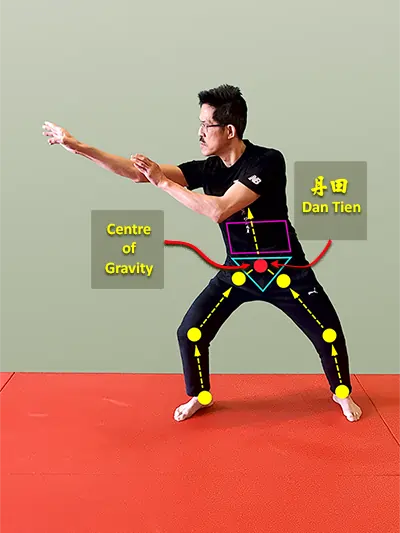
Diagram showing the modern biomechanics force lines from the ground up from the ankle through legs, pelvis (dantien), to the lumbar spine, and further upwards, corresponding to the Chinese ancient wisdom of the Dan Tien 丹田 .
The Dantien (丹田):
From the ancient Chinese energy meridians perspective, the focal point/centre of gravity coincides with the approximate location of the Dantien (丹田).
In traditional Chinese martial arts and ancient Chinese medicine, the Dantien (丹田)— is the body's energy centre.
In traditional Chinese martial arts training, usually stance training is taught first to a novice practitioner. Conditioning the structures which are connected to the centre of gravity or the Dantien is crucial in the effective delivery of any techniques.
Similarly, novice karate artists will begin with stance and footwork training, while boxers will continuously train their legs and hips via running, rope jumping, and weight training. -
Link 3: Lumbar Stability Hub and Thoracic Rotation Power Amplifier
The force then continues upwards into the lower back through the lumbar spine.
Lumbar spine: The lumbar spine is the section of the spinal column between the ribcage and the pelvis. In the diagram, it is represented by the centre-line in between the purple rectangle block.
Thoracic spine: The thoracic spine is the section of the spinal column which forms the upper two-thirds of the trunk of your body. In the diagram, it is represented by the centre-line in between the green rectangular block.
When you engage your core muscles, you lock your lumbar spine into a rigidly stacked structure, creating a stable block suitable as a force transmission hub.
The thoracic spine segment sits on the stable platform of the lumbar spine and is able to amplify and redirect the force through rotation. Through the thoracic rotation, the linear force from the lumbar is converted into rotational force, which allows you to effectively redirect the punching force.
Thoracic/Trunk mobility is a key technical skill in Choy Li Fut kung fu.
Any movement on a swaying, unstable pedestal results in energy leaks and a weakened connection. Subsequently, the thoracic section cannot transmit the force effectively, hence reducing the punching power. -
Link 4: The Scapula & Shoulder Stable Platform
The next stage of force transfer is from the thoracic section to the scapula. An effective way to channel the force is by “strapping” the scapula to the ribcage—by pulling the shoulder blade back and down onto your ribcage. Having a stable platform serves as a launch pad for your arms to spring off. -
Link 5: The Final Delivery with Arm, Fist & Wrist
The force now transmits through the final stage via your arm and fist before landing on the target. Here, most importantly, your wrist must be perfectly engaged and locked. A bent wrist leaks the energy which is meant for the target.

Why Involve Your Legs? The Power of the Lower Body vs the Upper Body
↩ back to table of contents
So, why do we need to involve our lower body and legs when we're just trying to forcefully drive our hands toward the intended target? Why not just work with our upper body, shoulders, and hands?
Moving a Tiny Ant vs Blast Through a Target
Moving a Tiny Ant
If you want to move a tiny ant, you have more than enough energy with just a flick of your little pinky finger. The ant requires almost no force.
Blasting Through a Target
However, if you need to effectively impact your hand strike through thick layers of muscle, you will need to recruit stronger parts of your body—the lower body— the muscles of the buttocks/glutes, thighs (i.e., quadriceps and hamstrings), the calf muscles, and the feet.
The lower body musculatures are powerful mechanical propellants. They have the capacity to move the whole weight of your body forward. In contrast, the upper body is adept in fine motor control, movement versatility, and more mobile.
Let’s explore the reasons for the lower body structures' superior power capacity.
The Mechanical Advantage of the Lower Body
Large, Strong Muscles, Large Energy Producing Capacity.
Glutes and quadriceps combined are the largest by volume and strongest muscles in the human body. Being the largest, they are suited for large power output—exactly what is needed for generating a sudden, powerful force for a punch.
High efficiency lower limb biomechanics
In conjunction with the stable core, which is the lower back/lumbar structure, the lower body structure forms a superior mechanical architecture for human locomotion. The sacrum (tailbone area), the pelvis, the hip joint (the joint where the thigh bone sockets into the pelvis) are connected tightly, providing stability.
Tighter connections = more stability – less energy leaks.
Calf-Ankle-Foot Spring-Off Mechanism
An intricate, seamless sequence of action happens before the foot leaves the ground.
Foot Plantar Fascia Windlass/ Bowstring creates a rigid pedestal for the next sequence.
Calf Muscles, Achilles Tendon Lift – utilizing the mechanical 2nd class lever, engaging the calf muscles and transferring to Achilles tendon lift the entire body weight upwards.
The 2nd class lever configuration is exactly like a wheelbarrow. The load is between the fulcrum (wheel) and the effort (handles). The wheelbarrow allows the ankle-foot complex to lift up the weight of the entire body.
In comparing the ankle structure of the foot to the wheelbarrow, the entire body weight is the load in between the ball of the foot (fulcrum/wheelbarrow’s wheel) and the calf muscles pulling up the heel bone, similar to lifting the handles of the wheelbarrow.
Achilles Tendon Slingshot – the elastic recoil from earlier mechanical pre-loading launches the entire body off the ground.
Key Takeaway: You cannot punch harder with your arms only than your legs can drive. Your punching power is limited by how effectively you recruit and channel the force from your lower body.
Your Brain Gets It, But Your Body Can’t Perform: A Challenge For Most Martial Artists
↩ back to table of contents
Understanding and knowing the kinetic chain is one half of the equation. The other half is plugging up the energy leaks from various parts of your body.
⚠️ The Fundamental Challenge: Of course, it’s easier said than done. This is the very challenge every martial artist faces. Coordinating dozens of muscles across multiple joints in perfect split-second timing is an art in itself.
Listed below are the most common areas of failure:
Arm Punching (No Leg/Hip Power On)
The Error: Punching from the shoulder without engaging and driving up from the leg and hip muscles first.
The Fix: Start off every punch with a ground push. Spring off from your rear foot before your arm moves.
Lumbar Instability #1 Hidden Leak
The Error: Being unaware of your lower back swaying or arching back during the punch.
The Fix: Be aware, brace, and feel your core turning into a rigid rod that drives your upper body toward delivering the strike.
Stiff Thoracic Spine (This is VERY COMMON!)
The Error: My coaching experience tells me this is a very common issue and presents the most challenge to martial arts beginners - unable to rotate the mid-back/trunk independently – i.e. thoracic rotational mobility.
The Fix: First, develop thoracic mobility ability through various thoracic or trunk rotation drills.
Floating Scapula
The Error: Shoulder blade hikes up or floats instead of pulling down and locking it against the ribcage.
The Fix: Scapular retraction drills, have the awareness/sensation of your scapula strapping to your ribcage and do not loose the form – in the beginning of learning this skill, you’ll have a habitual tendency to reach out with your arm to hit your target which will cause you to “elongate” your shoulder blade.
Buckling Prone Wrist #1 Injury Risk
The Error: Your wrist bends and buckles at impact, “leaking out” the energy.
Injury warning: improper form can result in wrist injury!
The Fix: Wrist alignment practice, strengthening the wrist musculatures.
📚 Research studies showing how kinetic chain improves punching force
Modern research studies consistently validate what the ancient kung fu masters have been teaching for generations, true punching power comes from channelling the power from ground up – transferring power or “chi” through the body’s kinetic chain into every strike.
- Lumbar Spine: Studies by spine biomechanist Dr. Stuart McGill reveal that without a stiff core, energy dissipates before reaching your fist. As McGill famously stated, "you can push a stone but you cannot push a rope" — an unstable core cannot transmit power (McGill, 2010).
- Scapula: Research on scapular dyskinesis shows that abnormal shoulder blade positioning compromises kinetic chain force transfer between trunk and upper limbs. Weakness of the middle trapezius and serratus anterior — muscles that "strap" the scapula to the ribcage — is directly linked to power loss (Oliveira et al., 2024).
- Wrist/Hand: Biomechanical studies of the human fist demonstrate that proper "buttressing" (correct fist formation) increases MCP joint stiffness by fourfold and more than doubles force transfer through the hand. An unbuttressed fist is a direct power leak (Morgan & Carrier, 2013).
- Muscle Activation Timing: Research on elite MMA fighters identified a "double peak" in muscle activation during strikes — an initial peak to stiffen the core, followed by a relaxation phase, then a second peak at impact. This pulsing cycle is essential for preventing energy leaks (McGill et al., 2010).
These findings validate what traditional martial arts have taught for centuries: power flows through a connected chain, and each link must be stable for maximum force transmission.
Scientific References
- McGill SM. (2010). Core training: evidence translating to better performance and injury prevention. Strength & Conditioning Journal, 32(3). View →
- McGill SM, Chaimberg JD, Frost DM, Fenwick MJ. (2010). Evidence of a double peak in muscle activation to enhance strike speed and force: an example with elite martial art fighters. Journal of Strength and Conditioning Research, 24(2), 348-357. View →
- Oliveira FAS, Calixtre LB, Santos LRH, et al. (2024). Relationship between core muscle performance and shoulder pain and function in individuals with shoulder pain with and without scapular dyskinesis. Journal of Bodywork and Movement Therapies. View →
- Okada T, Iwai K, Hakkaku T, Nakazato K. (2022). The association of lower trunk muscle strength with low back pain in elite lightweight judokas is dependent on lumbar spine abnormalities. Isokinetics & Exercise Science, 30(2), 177-186. View →
- Reeser JC, et al. (2010). Risk factors for volleyball-related shoulder pain and dysfunction. Journal of Athletic Training. View →
- Sciascia A, et al. (2012). Kinetic chain deficits in patients with posterior-superior labral tears. Journal of Shoulder and Elbow Surgery. View →
- Morgan, M. H., & Carrier, D. R. (2013). Protective buttressing of the human fist and the evolution of hominin hands. The Journal of Experimental Biology, 216(Pt 2), 236-244. View on Journal Website →
The Reality: It's Easier Said Than Done
Understanding and knowing about these power leaks is simple. Correcting them in your body is an ongoing endeavour. Every seasoned martial artist understands the grind of thousands of repetitions – to unlearn old habits, tendencies, sync up muscles – for discovering that perfect strike.
As I have said earlier, it would have been easier if we were built like a rigid rod. But since we’re built like a chain – a kinetic chain. If one weak link collapses, the entire strike falls apart.
So, the 10,000-hour rule to mastery applies; there’s no shortcut!
As Bruce Lee famously said: “I fear not the man who practiced 10,000 kicks once, but I fear the man who has practiced one kick 10,000 times.”
Striving for seamless, flowing technique is a constant pursuit of martial artistry. It’s a rewarding experience with rare moments of revelation when you finally “click” with a movement.
Continue to Part 2: Training Methods & Conditioning
Now that you understand the science, learn how to apply it:
Part 2 covers heavy/light bag protocols, progressive filler materials, and complete training cycles
Ready to Apply These Principles?
Book a free trial class to work on your kinetic chain with expert guidance at Bamboo Kung Fu.
You may be interested in:
Kung Fu performance at the 2023 Toronto Chinatown Festival
Bamboo Kung Fu students will perform Chinese martial arts on stage at the 23rd Toronto Chinatown Festival on Saturday, August 23, 2023. Our show will begin at 3:15 pm (UTC/GMT -4).
The martial arts show will be held at Spadina Avenue and Sullivan Street.
More - Martial art performance at the 2023 Toronto Chinatown Festival
Stances - The Most Important Secret in Martial Arts Practice
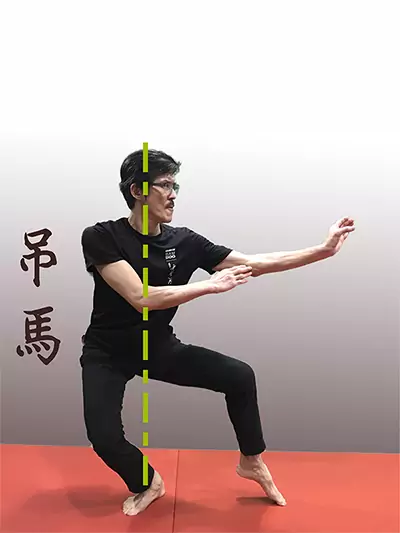
Stance is the ultimate foundation in martial arts practice. Stance is the essence of any kung fu practice. Without it, the quality and leverage of the kung fu techniques will not be effective.
More - Stances: the most important foundation in martial arts practice
Punching Power “Leaks”: How Bad Posture Lowers Punching Power
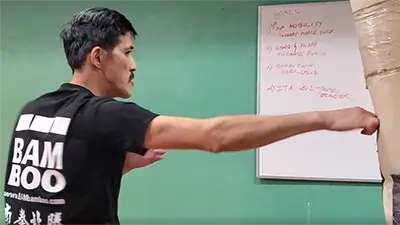
Does bad posture reduce punching power in kung fu? Yes. Forward-rounded shoulder posture reduces the leverage of the kinetic chain and affects punch accuracy, especially in Buk Sing Choy Li Fut kung fu.
More - How Bad Posture Causes Punching Power Leaks
Kung Fu Online Live Martial Arts Classes Long Distance Learning
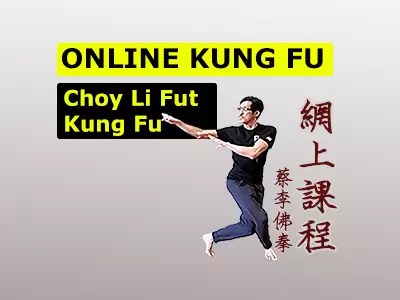
Online live interactive martial arts classes in the comfort of your home. Go to kung fu classes without travelling
More - Online Kung Fu classes
LIVE Online Kung Fu-Blind River, Elliot Lake, Thessalon, Bruce Mines
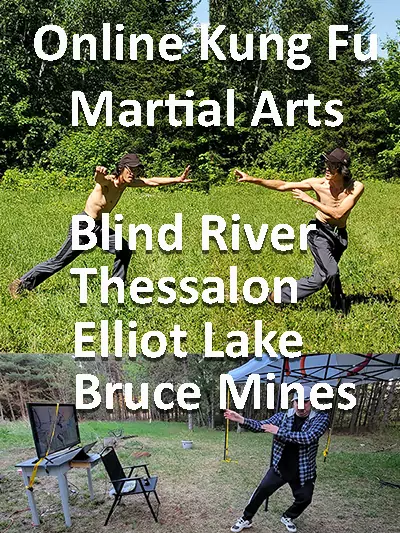
LIVE Online Kung Fu in the townships of Blind River, Elliot Lake, Thessalon, and Bruce Mines in northern Ontario.
Our online classes are cast LIVE from our location in downtown Toronto. Our online classes are Hybrid classes. This means the online classes are run together with in-person classes.
More - Online Kung Fu-Blind River, Thessalon, Elliot Lake, Bruce Mines in northern Ontario
Adult kung fu
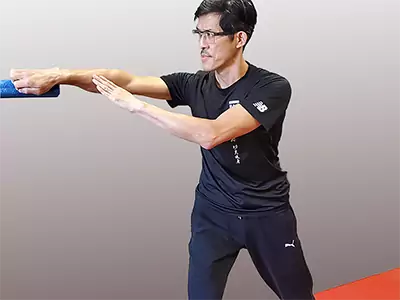
In-person and online options available.
Choy Li Fut kung fu is a dynamic martial art style with a diverse repertoire of movements. Class curriculum:
Primary goal: Improve overall fitness.
Secondary goal: Gain self-defence knowledge, Foster good biomechanics and posture to help you in day-to-day activities of daily living (ADL).
Everyone is welcome, with or without previous martial arts training experience.
More about Adult kung fu
Children kung fu

In-person and online options available.
Studies have shown the positive trends of long-term participation in physical activity programs such as martial art. Such programs help improve children’s executive functions i.e., creativity, flexibility, self-regulation, discipline, and working memory functions.
By instilling good movement patterns in the children’s kung fu program, children will gain the foundation which will set them up for a healthy and active lifestyle.
More about Children's kung fu
Essentrics™-stretching, strengthening, mobility full body exercise
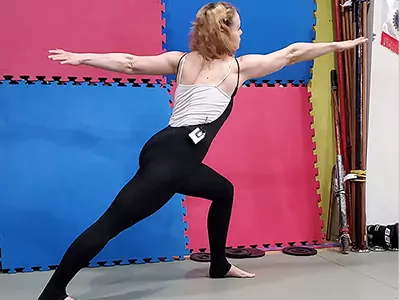
In-person and online options available.
Essentrics™ is a full-body workout that draws inspiration from ballet, Tai-Chi, that develops lean, strong muscles and improves your posture. The fluid and dynamic movements nature of the exercise is low impact and improves joint health. Lighten up your mood and move to the rhythm of the songs playlist.
More about Essentrics™